Agentic Data Analyst — AI Data Intelligence for Enterprise Teams | Adople AI

Adople builds enterprise AI solutions and AI agents that automate critical workflows, connect fragmented data, and transform information into intelligent action.

  • Address

    600 California St, San Francisco, CA 94108
  • Email

    info@adople.ai
  • Contact

    +1 (415) 630-2010
ENTERPRISE DATA INTELLIGENCE

Agentic Data Analyst

From business questions to trusted data intelligence

Ask questions in plain English and get validated answers from live enterprise data — along with the SQL, charts, dashboards, or reports behind them.

PRODUCT DEMO
01 / PRODUCT DEFINITION

What is the Agentic Data Analyst?

Agentic Data Analyst is an enterprise data-intelligence application that connects directly to live databases, cloud warehouses, spreadsheets, and SaaS applications.

Users ask business questions in natural language. The agent identifies the relevant context, plans the analytical work, retrieves the required information, validates the result, and returns an answer as a chart, table, dashboard, or report.

“The intelligence layer between a business question and a trusted, actionable answer.”
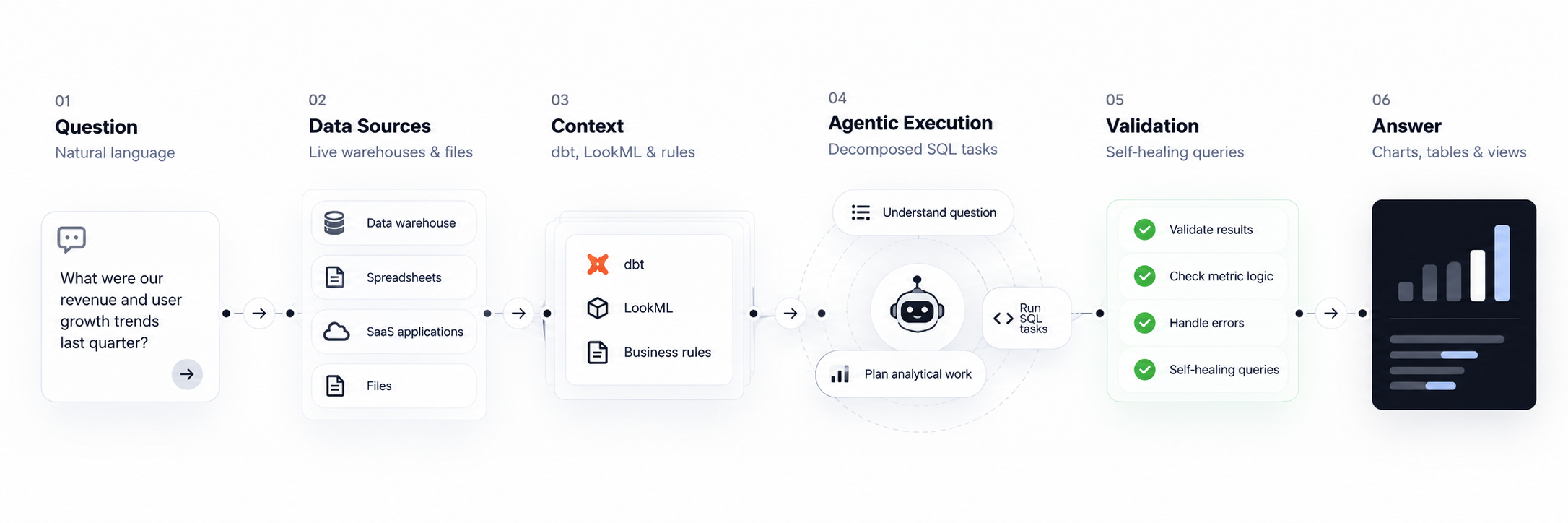
Analytical execution pipeline from a natural-language question through data sources, context, agentic execution, validation, and an answer
01QuestionNatural language
02Data SourcesLive warehouses & files
03Contextdbt, LookML & rules
04Agentic ExecutionDecomposed SQL tasks
05ValidationSelf-healing queries
06AnswerCharts, tables & views
02 / THE OPERATIONAL PROBLEM

The question is simple. Getting a trustworthy answer is not.

A question such as “Compare regional sales growth between our SQL database and last month’s Excel report” sounds straightforward. In practice, someone has to locate both sources, understand how the fields relate, write the join, calculate the growth percentage, validate the result, and prepare the report.

The 5 Friction Points of Enterprise Analytics

  • 01
    Scattered Enterprise Data

    Critical information sits across warehouses, production databases, SaaS tools, spreadsheets, and BI systems.

  • 02
    Pre-computed Dashboards

    Traditional BI answers questions that have already been modeled. New inquiries require tickets and days of delay.

  • 03
    Backlog & Triage Bottlenecks

    Ad-hoc analytical requests pile up in data team queues, creating friction between questions and decisions.

  • 04
    Ungoverned AI Hallucinations

    Unchecked AI SQL generators create queries that look plausible on the surface but violate actual metric rules.

  • 05
    Isolated Tribal Knowledge

    Business definitions and join logic remain locked in individual analysts’ minds instead of a living system.

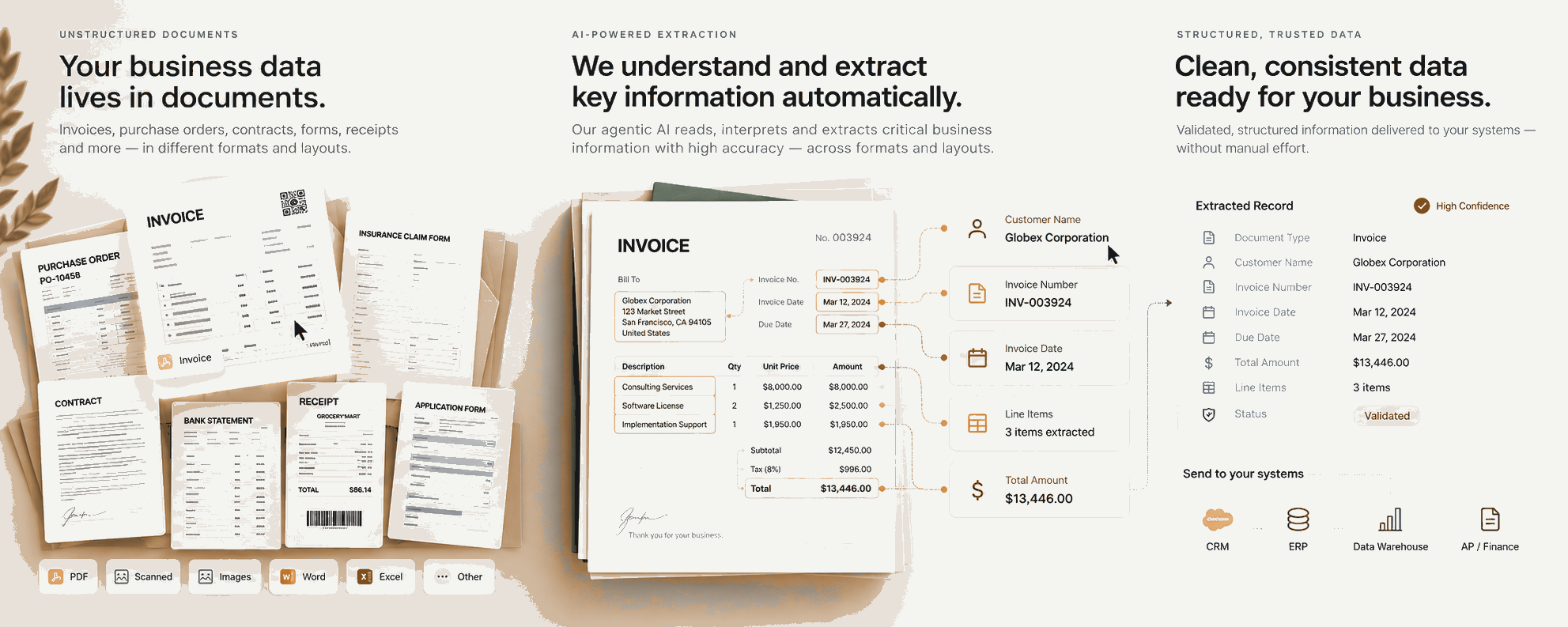
Agentic AI document extraction workflow showing unstructured documents becoming structured, trusted business data
03 / PRODUCT CAPABILITIES

What Analyst Agent Does

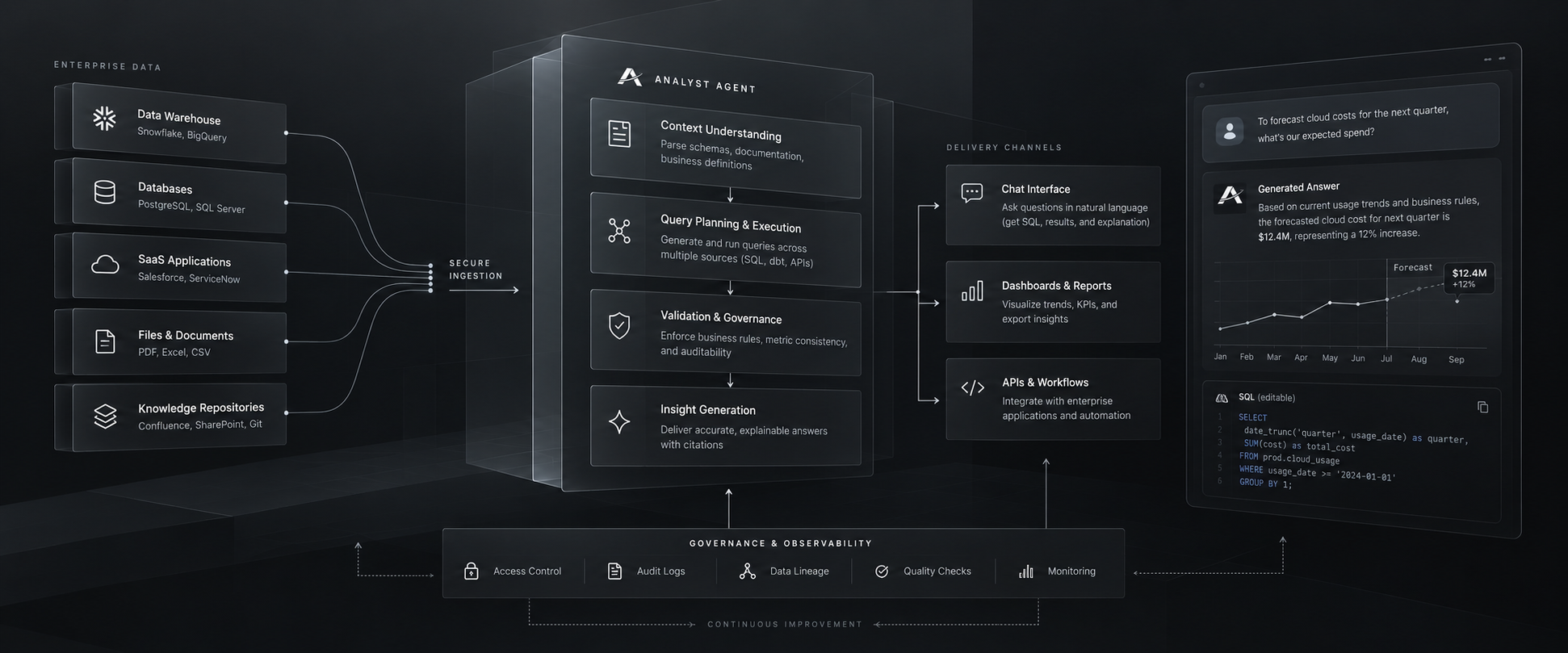
A unified analytical layer combining structured planning, governed context, and automated validation across your data infrastructure.

Ask, refine, and get results

By combining structured planning, observations, and logic, Analyst Agent delivers fast, explainable analysis from the data sources your organization already uses.

Ask for a specific metric, explore an open-ended question, refine the request naturally, and move from the answer to a shareable report or dashboard.

  • Ask for specific data or open-ended analytical exploration.
  • Refine the request without rebuilding a query from scratch.
  • Generate charts, reports, and dashboards directly from the validated result.
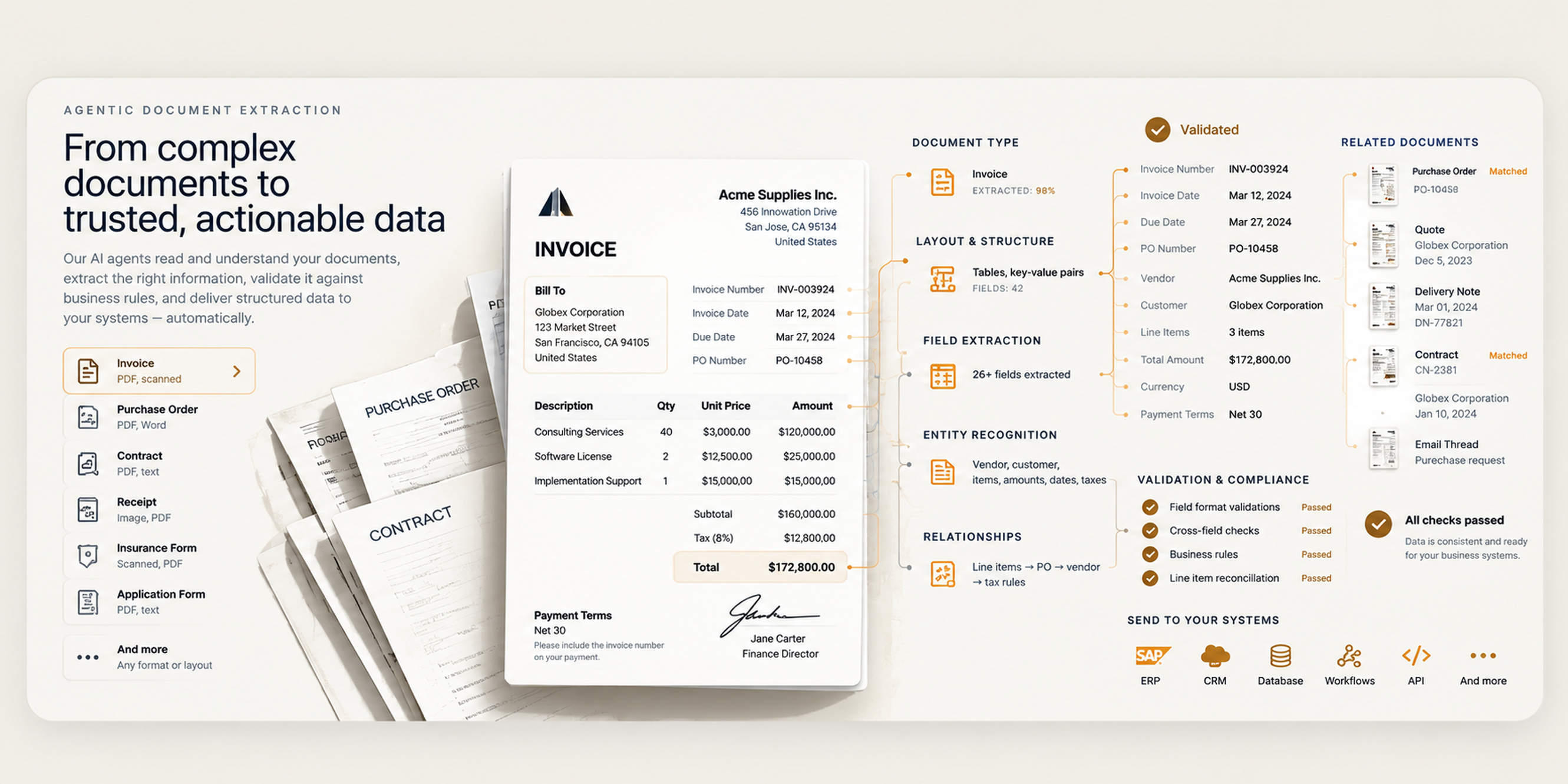
Agentic document extraction workflow turning complex documents into trusted, actionable data
Manage Context workflow bringing together data, definitions, and business rules

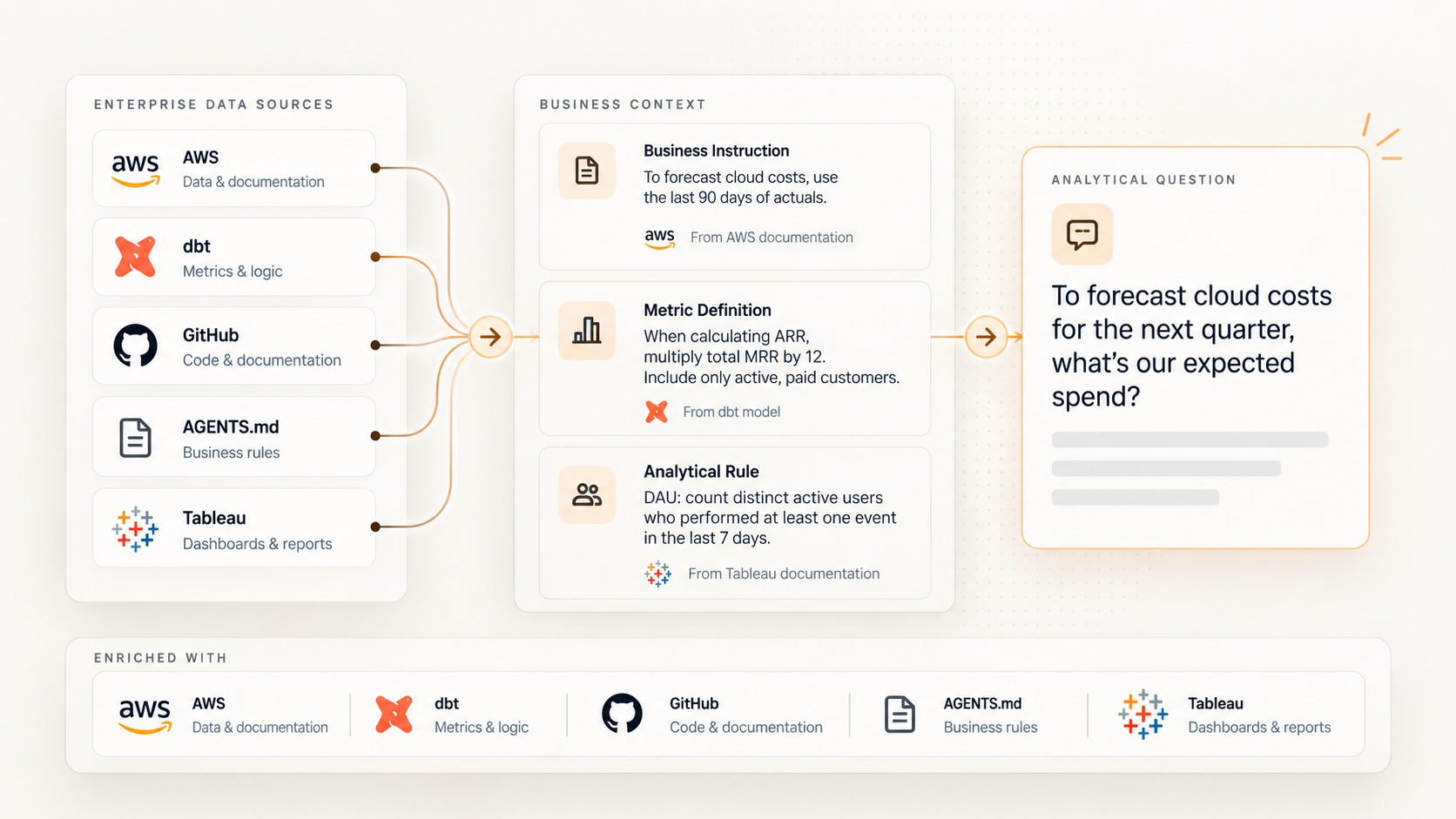
Context tailored to your business rules

Ensure every query adheres to metric definitions, schemas, and governance rules. Connect schema metadata, custom business instructions, and metric definitions from dbt, LookML, or Git.

Analyst Agent grounds queries in the vocabulary and analytical rules your teams already use so that identical requests produce consistent, auditable answers.

RAW DATA + BUSINESS CONTEXT = TRUSTED INSIGHT
  • Integrate schema definitions, metric calculations, and table relationships.
  • Govern metric consistency across multiple departments.
  • Incorporate business instructions from dbt models and documentation.

Any data. Any LLM. One analytical layer.

Integrate with the tools and workflows already in place. Connect data warehouses, SQL databases, SaaS applications, local files, and knowledge systems through one analytical interface.

Choose the model providers that fit your performance, privacy, and cost requirements instead of rebuilding the data environment around a single model.

  • Connect warehouses, databases, Salesforce, Excel, and other enterprise sources.
  • Switch between leading or OpenAI-compatible model providers.
  • Bring existing dbt, LookML, Git, and knowledge workflows into context.
Connected enterprise data sources, language models, business tools, and analytical results

Monitor and observe your AI Analyst

Monitor activity, performance, and quality across the analytical workflows running against your data.

Visibility into context coverage, analyst accuracy, clarifications, errors, and user feedback gives data teams the signals they need to improve the system over time.

Context CoverageTrack schema & rule usage
AI ClarificationsInspect disambiguation steps
Execution ErrorsReal-time syntax & self-repair logs
User FeedbackAudit feedback & verified queries
04 / EXECUTION LIFECYCLE

A business question becomes a checked analytical workflow.

Analyst Agent does more than generate a response. It plans the work, identifies the relevant context, retrieves the required data, validates the result, and delivers the output in the format the team needs.

01 / ASK

Ask

Submit a business question in plain English through the application interface or directly via Slack.

02 / UNDERSTAND

Understand

Identify relevant metrics, definitions, connected sources, and governed business instructions.

03 / DECOMPOSE

Decompose

Break the request into smaller tasks required to answer it, such as retrieving regional sales, joining datasets, and calculating growth.

04 / RETRIEVE

Retrieve

Fetch and reconcile information from one or multiple connected sources in parallel when the request requires it.

05 / VALIDATE

Validate

Inspect the result, repair broken SQL or unexpected output, and retry execution before producing the final answer.

06 / DELIVER

Deliver

Return an answer, chart, data table, persistent dashboard, or formatted executive report.

RECURSIVE REASONING

The Agentic Loop

Every request moves through an observable, self-healing loop that catches discrepancies and refines execution before producing the final deliverable.

Node 01 / PlanDeconstruct question, resolve semantic context & build execution tasks
➔
Node 02 / ActQuery live warehouses, execute joins & retrieve sources in parallel
➔
Node 03 / ObserveInspect returned datasets, evaluate syntax & check metric boundaries
➔
Node 04 / ReflectSelf-heal failed SQL, retry with updated schema context & verify math
05 / OPERATIONAL CONTRAST

From a business question to a verified analytical result.

See how the same analytical question moves from fragmented manual work to a governed, repeatable workflow.

WORKED SCENARIOREGIONAL SALES GROWTH — MANUAL FRAGMENTATION VS. GOVERNED WORKFLOW
06 / FROM ANSWERS TO DECISIONS

One analytical workflow. Different decisions.

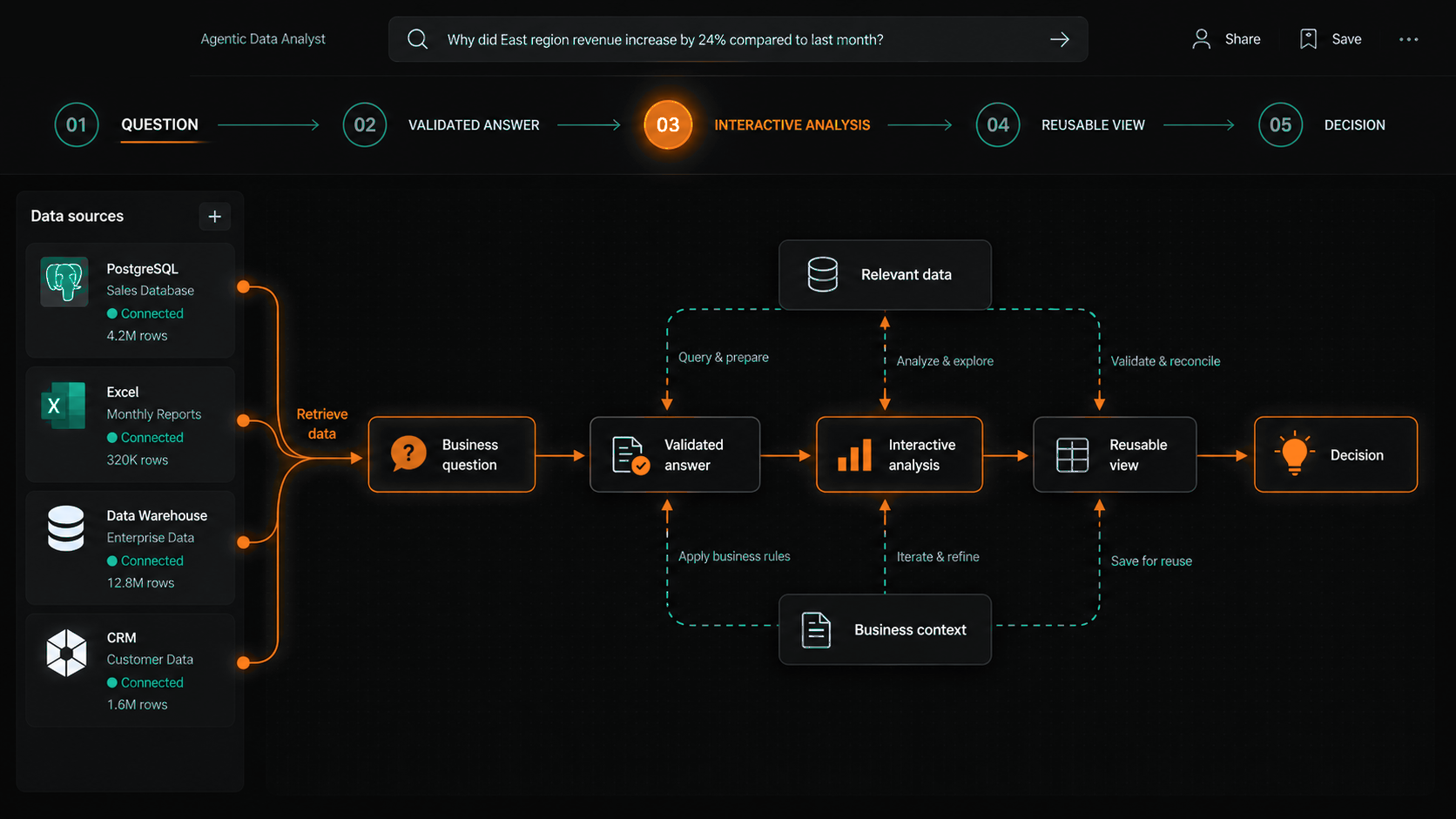
Analyst Agent turns a business question into a validated analytical result that teams can explore, share, and reuse. The same governed workflow supports different departments without creating another reporting process for every question.

01QUESTIONAsk in business language
02VALIDATED ANSWERGround the result in trusted data
03INTERACTIVE ANALYSISExplore drivers and dimensions
04REUSABLE VIEWSave a repeatable analytical view
05DECISIONAct with confidence
WHAT THE WORKFLOW PRODUCES
01

VALIDATED ANSWERS

Move from a business question to a grounded answer with the relevant data, SQL, calculations, and supporting context visible for review.

SQL & LOGIC TRACESCHEMA GROUNDED
02

INTERACTIVE ANALYSIS

Explore the result through charts, tables, breakdowns, and visual analysis that help teams investigate what is driving the numbers.

DYNAMIC BREAKDOWNSDIMENSION SLICING
03

REUSABLE VIEWS & DASHBOARDS

Turn recurring analysis into dashboards, reports, and shared analytical views that can be revisited as the underlying data changes.

LIVING ARTIFACTSAUTOMATED REFRESH
WHO USES THOSE OUTPUTS
OPERATIONAL TEAMS

FINANCE & OPERATIONS

Reconcile data across warehouses, spreadsheets, and business systems, then turn recurring calculations into repeatable reporting workflows.

GROWTH & GTM

REVENUE TEAMS

Investigate pipeline, customer performance, regional growth, and sales movement without waiting for a new dashboard or ticket response.

CORE ANALYTICS

DATA & ANALYTICS

Reduce repetitive ad-hoc requests while keeping complete visibility into queries, context, validation steps, and execution safety.

ENTERPRISE ARCHITECTURE

TECHNOLOGY & DATA LEADERS

Connect existing infrastructure, select the model provider that fits the workload, and monitor AI-assisted analytical operations.

08 / ENTERPRISE SECURITY & GOVERNANCE

Built for enterprise governance, privacy, and control.

Security and access controls are enforced at every step of the analytical lifecycle.

Role-Based Access Control (RBAC)

The agent respects underlying warehouse permissions, row-level security, and schema restrictions. Users can only query tables they are authorized to access.

Zero Model Training on Customer Data

Enterprise data and queries are never used to train public LLMs. Transient prompts are executed securely under enterprise zero-retention agreements.

Traceable Audit Logging

Every generated SQL query, intermediate reflection, execution time, and data output is permanently recorded in compliance logs.

Execution Sandboxing

Queries are validated in safe sandboxes with read-only execution modes, timeout bounds, and resource query limits.

09 / QUESTIONS

Frequently asked questions

Everything you need to know about Agentic Data Analyst.

An AI data analyst agent is an autonomous software system that connects conversational AI with enterprise data sources. It interprets natural-language business questions, identifies context and schema relationships, plans and executes analytical queries, validates results, and returns answers as charts, dashboards, or reports without requiring users to write SQL.

10 / GET STARTED

Turn enterprise data into answers your teams can act on.

See how Analyst Agent connects business questions, enterprise data, business context, and verified analytical results into a repeatable workflow.